



Migrator
The US Capitol — a symbol of the official immigration system
A straight answer

Is Migrator a scam?

Migrator is a US-based immigration company founded in 2023. We work with visas for talented professionals, entrepreneurs, and skilled specialists. Let's look at where the negativity comes from — and why it isn't true.

A Migrator immigration consultant — visas, reviews, and case evaluation

Migrator is a US-based immigration company founded in 2023. We work with visas for talented professionals, entrepreneurs, and skilled specialists.

The more visible a company becomes, the more often it gets dragged into black-hat marketing: its website gets cloned, fake reviews get posted, paid hit pieces get written, and someone offers to remove the negativity for money. On this page we show how all of this works, who is behind these publications, and where to find real reviews from Migrator clients.

The US flag against the sky — the official immigration system
The fake-review industry

Fake reviews are an industry of their own

Negative publications don't target Migrator alone. Google almost any visible service company and you'll easily find the words "scam", "fraud", "rip-off", "negative reviews" right next to its name. It happens most often where the price tag is high, competition is fierce, and the topic itself makes clients anxious.

Immigration is exactly that kind of field: people are making a major decision, they are afraid of getting it wrong, and they react strongly to loud accusations. Review sites, anonymous authors, and reputation agencies exploit this. It is an entire industry built on selling "protection from negativity".

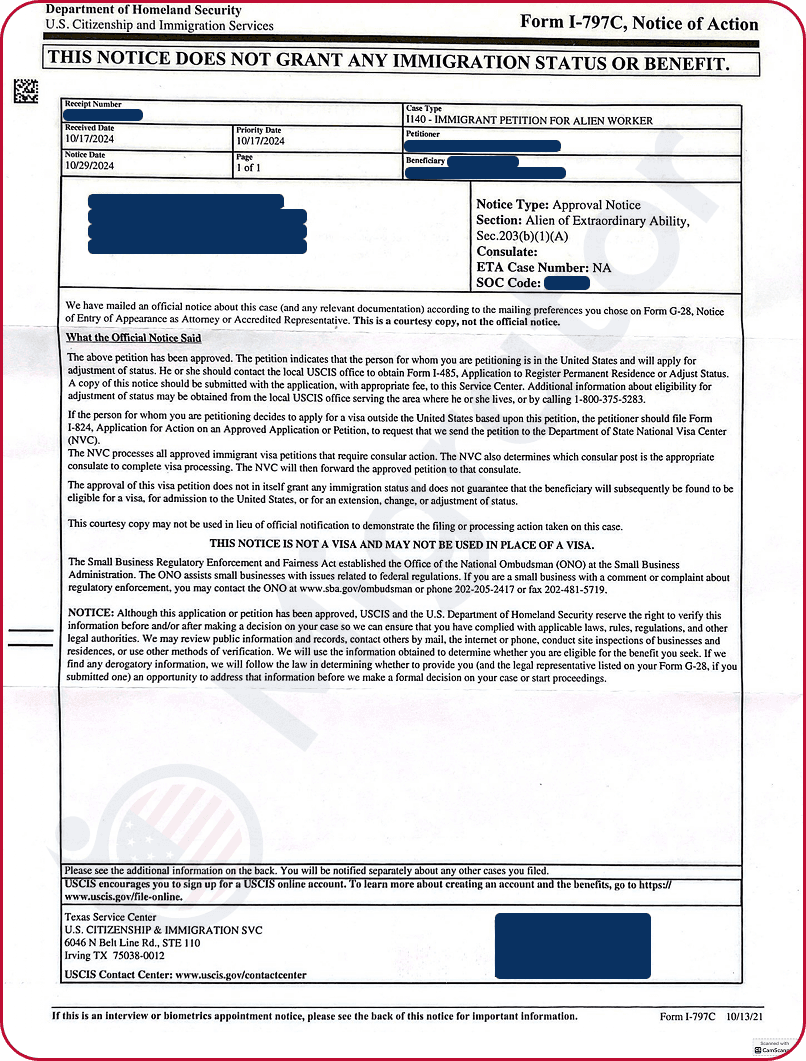
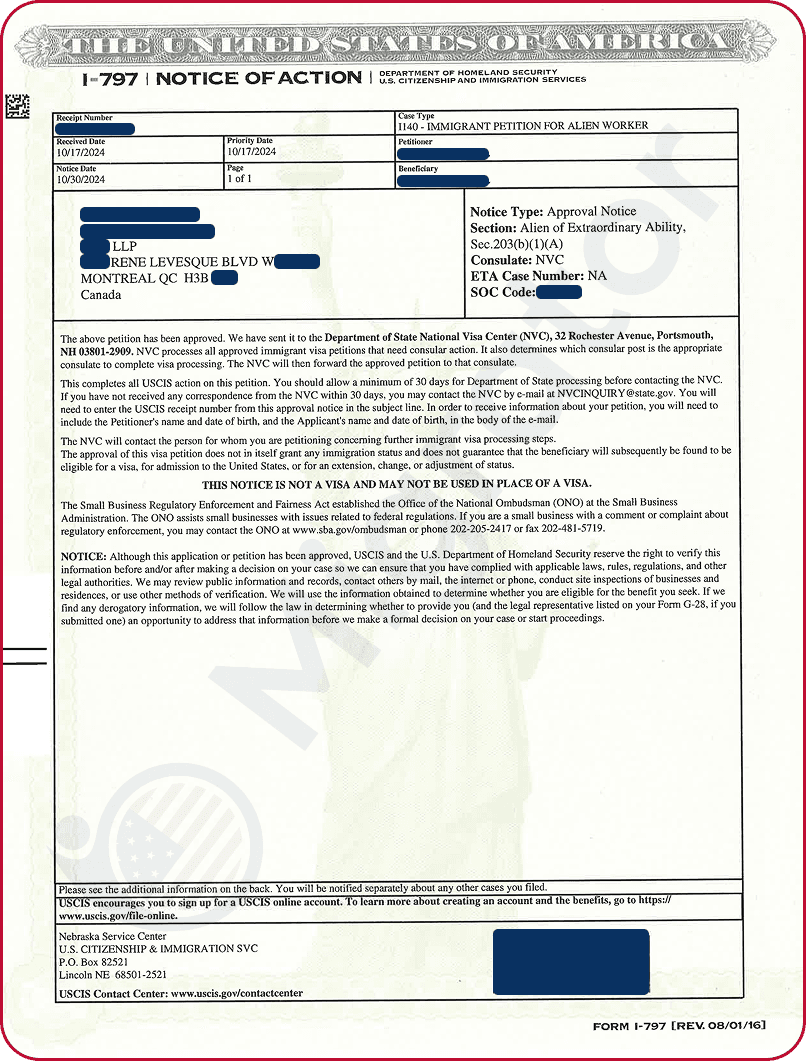
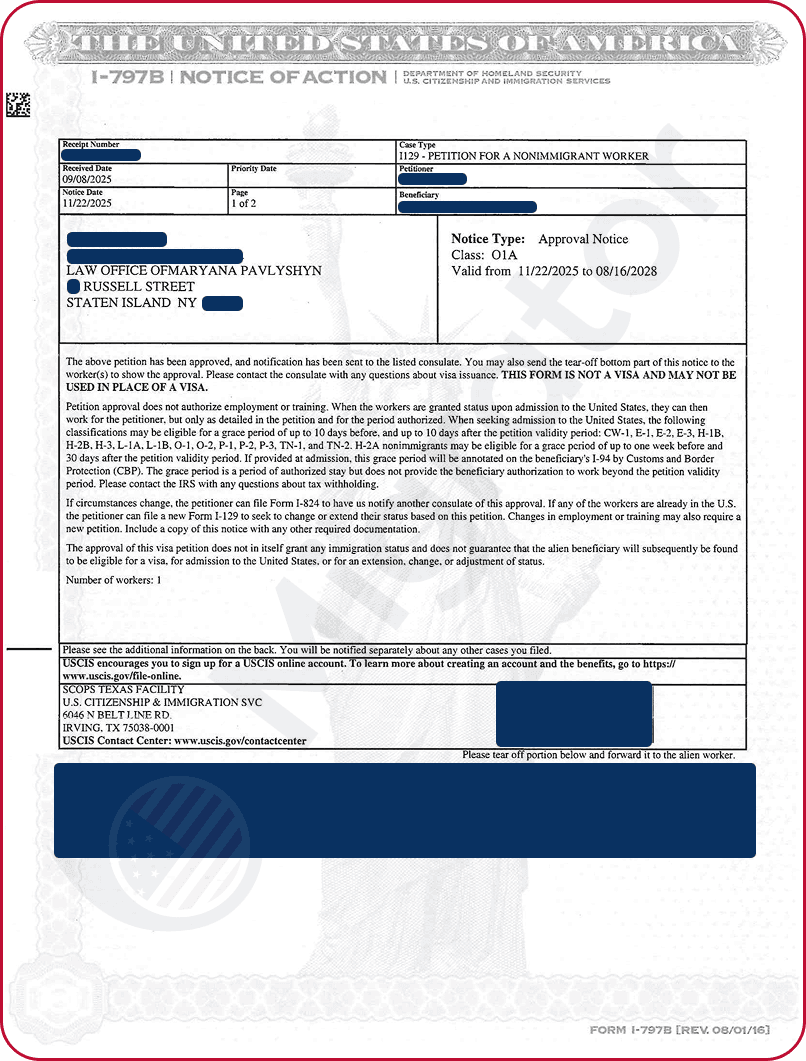
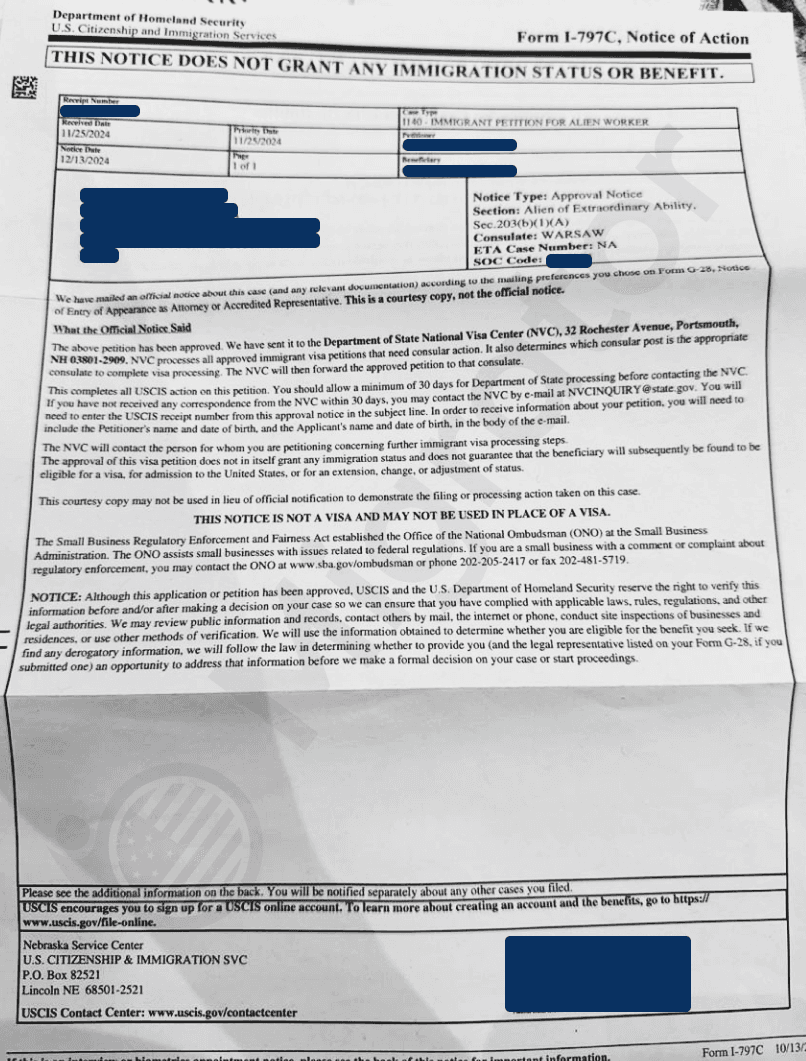
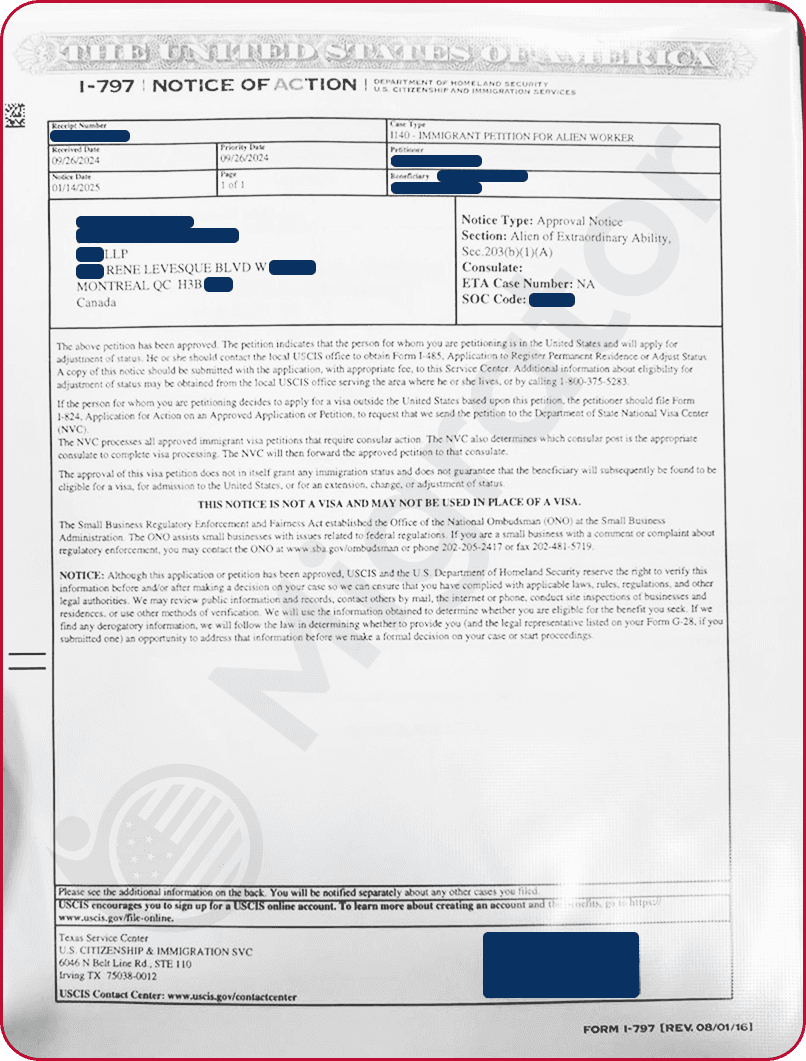
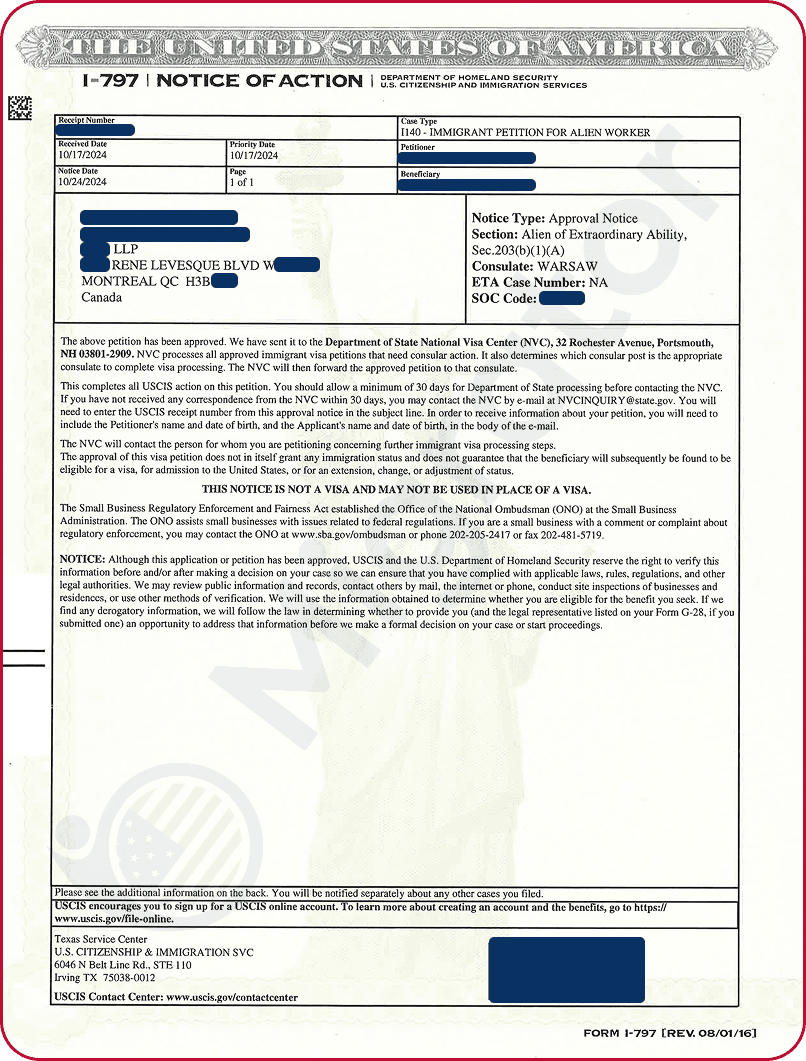
A desk: an approved petition, a laptop with reviews, and the US flag
How it works

How the paid-negativity scheme works

  1. 01

    A negative article or review gets published.

  2. 02

    It leans on loaded words: "scam", "fraud", "rip-off".

  3. 03

    Aggressive SEO promotion is layered on top.

  4. 04

    Facts are never verified — or get distorted.

  5. 05

    The piece quickly climbs to the top of search results.

  6. 06

    Copies of the material are mass-posted across different sites.

  7. 07

    The company is offered paid removal of the negativity.

  8. 08

    If the company refuses to pay, new publications appear.

Some reviews may reflect real client experience — and we always look into those situations. But fake publications, extortion, and paid negativity are a different story, and one we run into regularly.

We are not the only target — colleagues get hit too: Mircare and RIKC, for example, have been victims of the same schemes. We do not pay to have fakes removed. We collect evidence, present it publicly, and respond with facts.

Where to look for reviews

Where the reviews are fake — and where they are real

Fake reviews
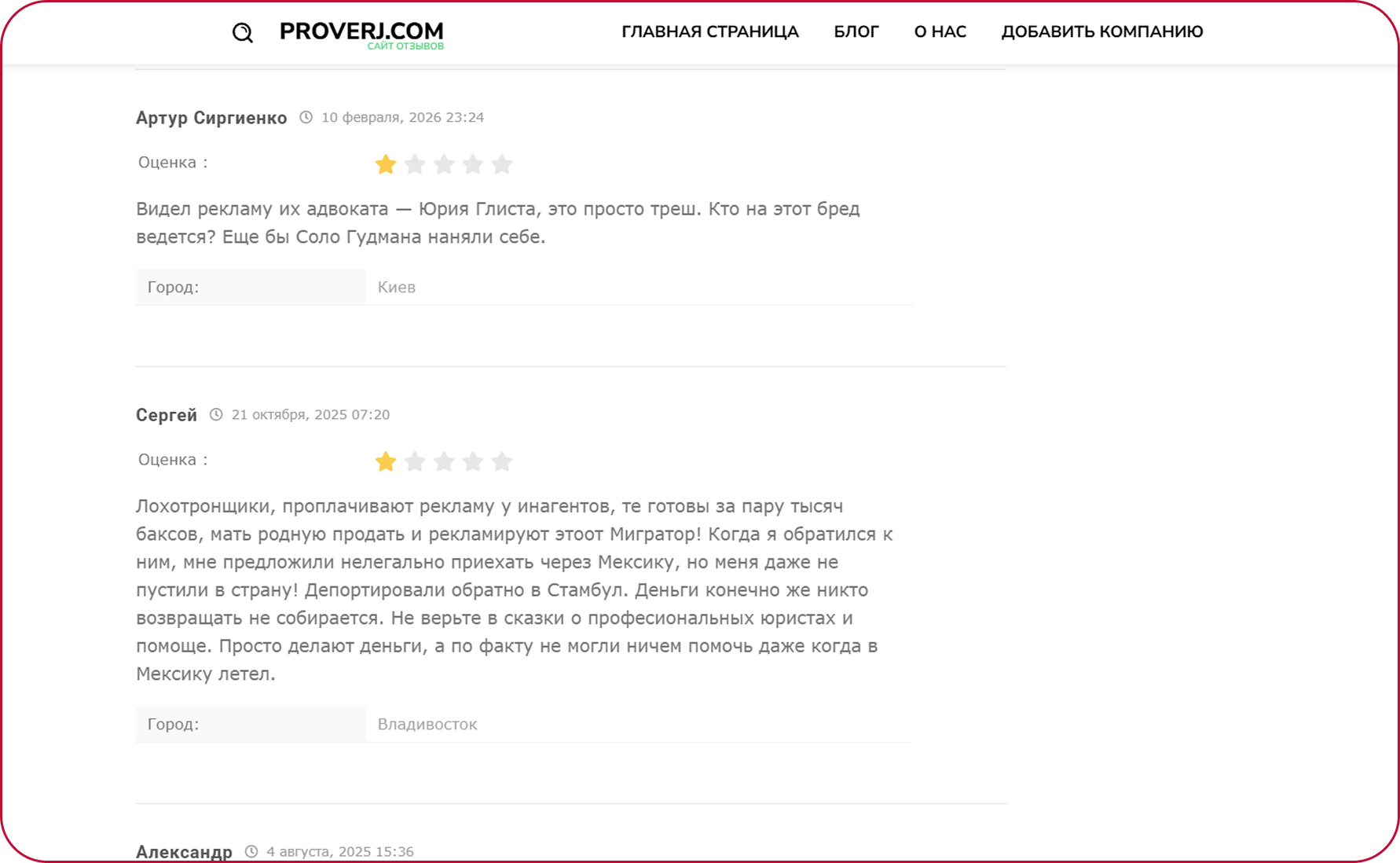
  • Proverj
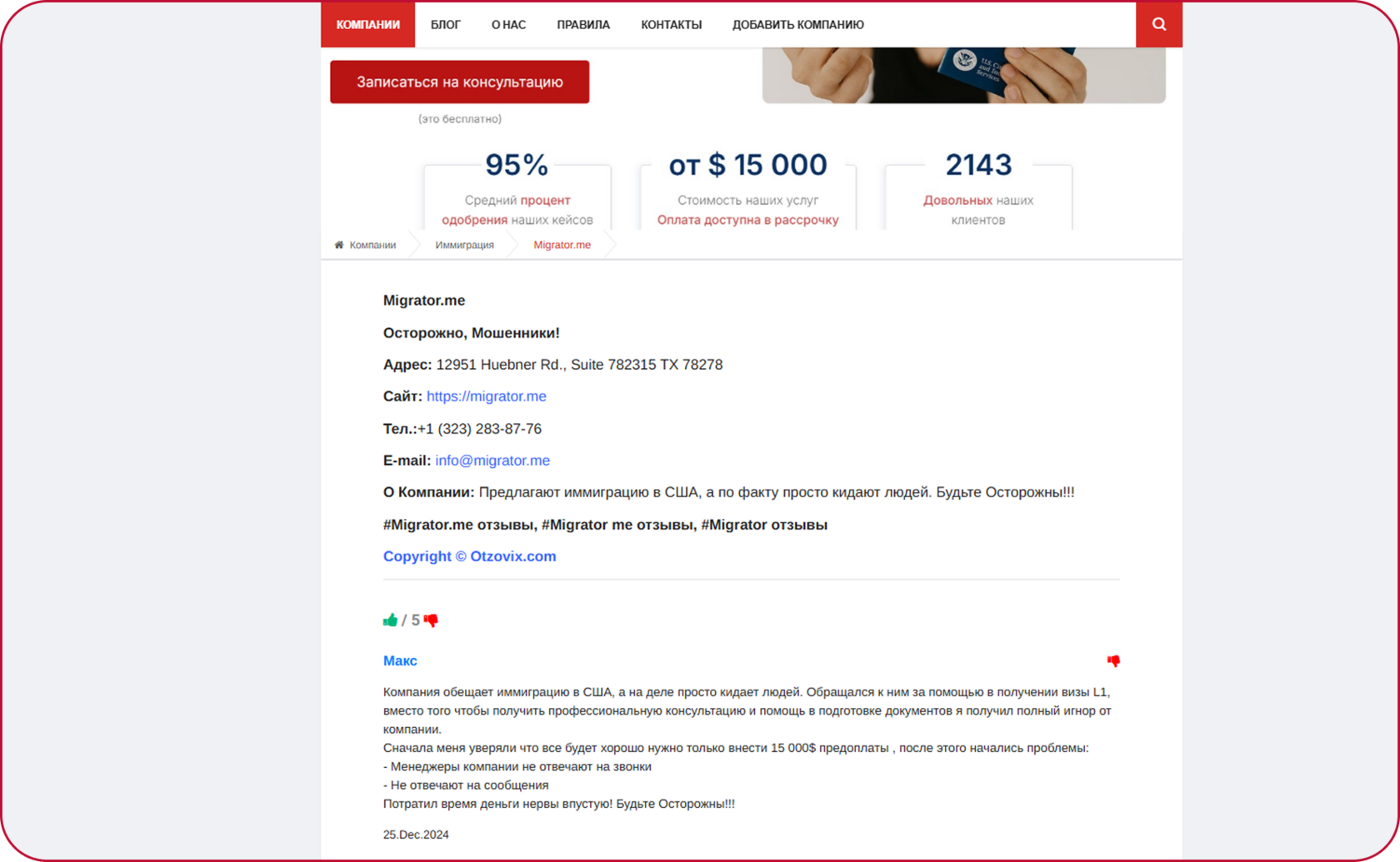
  • Otzovix
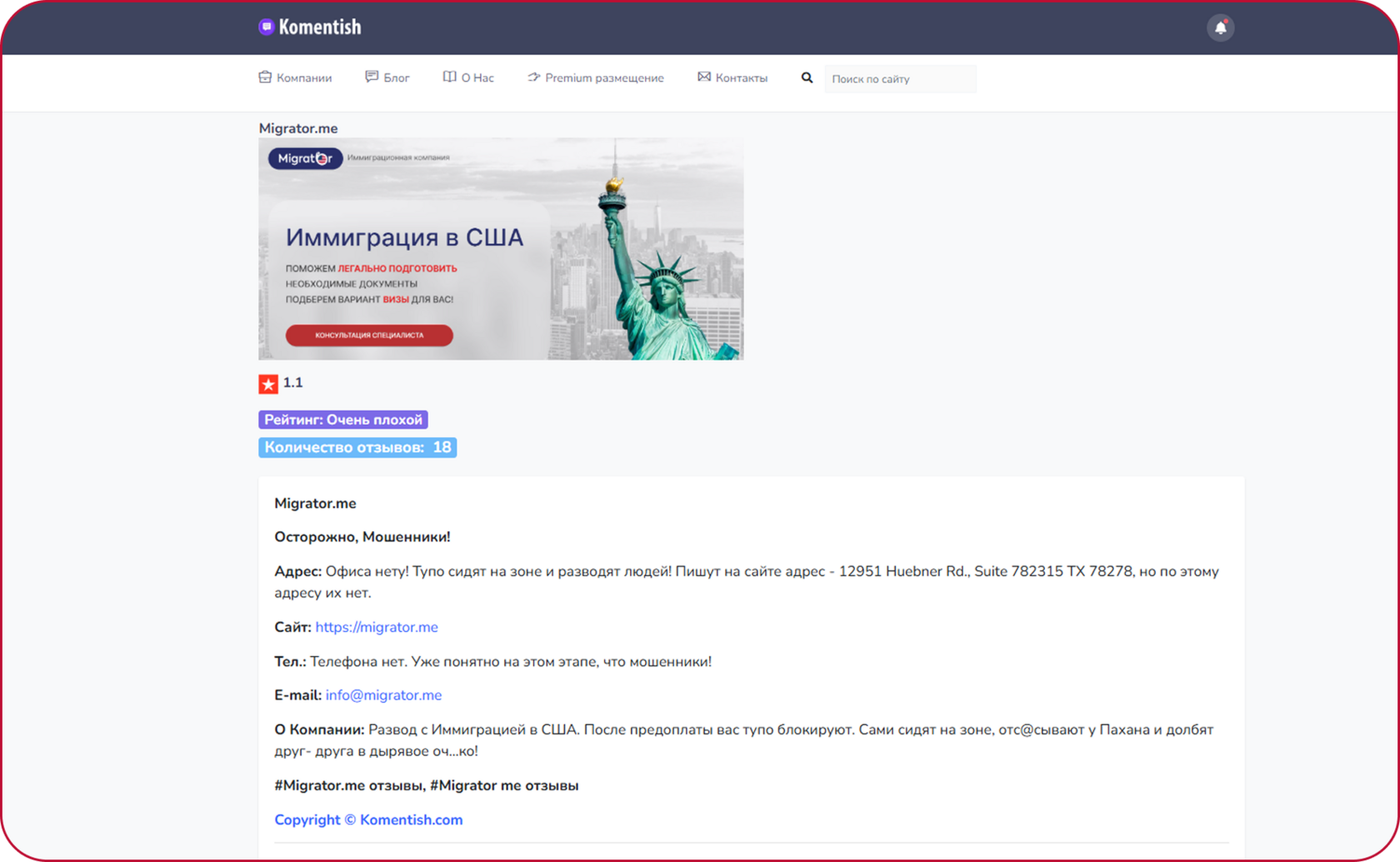
  • Kommentish
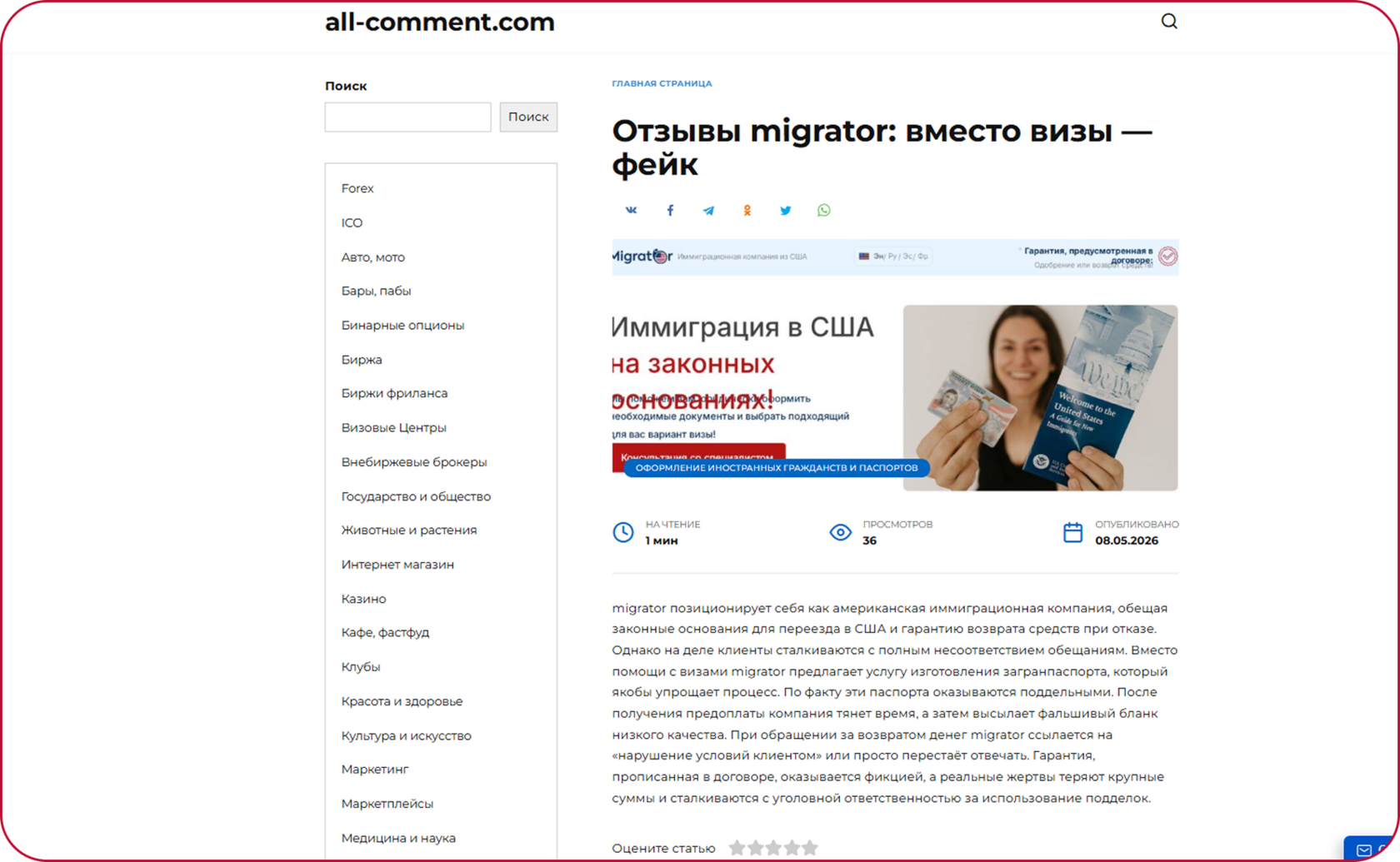
  • All-Comments
  • Plohotron
  • Redditthread from August 2025
Real reviews
  • Otzovik
  • Otzovikon
  • Eto-Razvod
  • Trustpilot
  • YouTube
  • Migrator.me
Learn to read reviews

How to tell a dubious review from a real one

We don't ask you to take our word for it — quite the opposite: check the source, the author, and the facts. Dubious publications tend to share the same recurring traits:

Signs of a dubious review
  • On these platforms up to 90% of reviews are negative. Positive ones exist only for companies that paid — or for fake ones.
  • No proof the author was ever a client: no contract, no case number, no documents, no correspondence.
  • Lots of emotion, few facts. "Scammers", "fraud", "they cheated us" play on fear but prove nothing.
  • Factual errors: Migrator gets credited with services we have never offered — family immigration, crossing through Mexico, foreign passport processing.
  • The platform does not verify authors and gives the company no real way to respond.
  • After publication comes an offer to delete the negativity for money — the review becomes a pressure tool.

Here is a simple way to check: try posting a positive review on one of these platforms yourself — it won't get published.

When a site doesn't verify facts but offers to remove negativity for a fee, it is no longer a review platform. It is reputation blackmail.

Specific cases

Case-by-case breakdown

We split the situations into separate breakdowns — that makes it easier to see exactly who published the negativity, what evidence exists in each case, and why we consider these materials false.

Review sites: Komentish, Proverj, Otzovix, and similar Russian platforms

Since the very start of Migrator we have dealt with platforms that publish negative materials about the company and then reach out offering to "sort it out". At first glance these look like ordinary review sites, but a closer look shows: many publications go through no verification, authors never prove they were clients, and the texts are built on loud accusations with no documents or facts behind them.

Some of the materials about us contained absurd claims: for example, that the Migrator team was allegedly "in prison", or we were credited with services the company has never provided. They wrote about visa denials — even though at that point the company was only 2–3 months old, and no case could physically have been completed in that time. None of these claims are written to be verified — they are written to trigger an emotional reaction.

A separate, important point is our correspondence with representatives of these platforms. We saved the messages discussing the removal of negative reviews, replacing them with positive ones, payment methods, and timelines. When a site first publishes unverified negativity and then offers to take it down for money, it is no longer a platform for honest reviews — it is a tool of reputational pressure.
Is Migrator a scam? A rebuttal by Migrator CEO Alexey Pudov (in Russian)

Plohotron: pseudo-journalism and publishing negativity without fact-checking

A separate story is the publications on Plohotron, a Russian site that positions itself as an archive of independent exposés. Here it was not about anonymous reviews but about materials framed as investigative journalism. At first a representative of the site contacted us, asked questions, and got answers. But once the piece was published, it became clear: the material was built not as an honest fact-check but as a pre-assembled construction in which the company had been declared guilty in advance.

We see a textbook "sandwich" technique here:

  • real answers and facts about the company are collected;
  • only a small share of those real facts stays in the article;
  • most of it gets inflated to the point of absurdity;
  • everything else is filled in with lies;
  • the pieces are mixed together — like layering a sandwich.

In August–September 2025 Plohotron mass-distributed fake negative reviews with invented stories across review sites, on Trustpilot, in visa chats and communities, and in Reddit threads. To understand the mechanics, the Migrator team ran an experiment: one of our employees posed as an unhappy client and submitted a made-up story. It was published without any verification — no client status confirmed, no documents requested, no facts checked.

After our videos came out, people in the comments shared how much they had paid Plohotron to take articles down; our competitors reported receiving the same kind of offers. When a platform publishes negativity and then offers to remove it for a fee, this is no longer about consumer protection — or about journalism.

"Migrator is a scam"... again! (in Russian)
A real negative review of Migrator! Written by... Migrator (in Russian)

Cloning our website and using our brand in someone else's marketing

Migrator is a visible immigration company for the Russian-speaking audience: we run social media, show real cases, film videos, and speak openly about talent visas, EB-1, O-1, EB-2 NIW, and USCIS requirements. That visibility makes our brand a target for someone else's marketing. Some build their advertising on comparisons with Migrator, some use our name in negative publications, and some go further — they copy the website, its structure and texts, and even create a mirror that looks like Migrator but leads to another company's contacts.

For users this is dangerous: a person searches for Migrator, lands on a look-alike site, and submits a request — not to us, but to a third-party company. At that point cloning stops being a design question — it becomes a risk for the client, who may not realize who they are handing their data to.

When a site looks like Migrator but leads to another company's contacts, it is not just copied design. It is a risk for the user.

Warning: the Migrator website has been cloned (in Russian)
Migrator exposed. The whole truth in 5 minutes (in Russian)

New reputation agencies and paid negativity

The negativity scheme didn't end with the old review sites. Every so often we hear from new companies introducing themselves as reputation agencies or negativity-removal specialists. On paper they offer to "help". In practice: first an article full of loud accusations appears, then comes an offer to solve the problem.

These materials follow one template: "scam", "fraud", "rip-off", "beware" in the headline, plenty of emotion and few verifiable facts inside. Read them carefully and you find crude errors — one piece, for example, mentioned passport services, even though Migrator does not handle passports at all. That is not a debatable wording; it is a factual error.

That is why we don't give live links to these publications — we don't want to boost them in search results — and show the mechanics in screenshots instead. Our position: we do not pay to remove fakes and do not take part in schemes where a reputation is first damaged and then offered a paid "repair".

Our position

Open and public

If Migrator were a scam, we would operate very differently: take on everyone, skip the case evaluation, never go through the documents, never put the terms in a contract, and never explain the risks to clients. Fraudulent schemes don't need transparency — they need fast money and a minimal trail.

Our work is built the opposite way — with clear logic, documents, and verification at every stage:

  1. 01

    We run a preliminary case evaluation

    We study the client's situation, analyze their profile, and assess the realistic chances of a visa. At this stage the person already understands which path looks most promising for them.

  2. 02

    We hold an online meeting with a specialist

    An immigration expert goes through the case, answers questions, and explains the risks and next steps. The client gets a personal strategy, not generic promises.

  3. 03

    We sign a contract and lock in the terms

    Before any work starts we sign a contract that spells out the terms, the stages of cooperation, and the criteria for working on the case. It is a formalized process, not a "wire the money and wait" scheme.

  4. 04

    We start working on the case

    The client gets a personal manager, an onboarding call, instructions, and materials. We guide the document collection and answer questions at every step.

  5. 05

    We build and verify the case

    Once the documents are collected, the team and the attorney assemble the case. The materials go through several rounds of review and analysis: documents and texts are checked thoroughly.

  6. 06

    We file the case with USCIS

    We submit the finished document package to US immigration services, oversee the filing, and record the case number. If an RFE arrives, we prepare the response and keep supporting the case.

  7. 07

    We receive the decision and act on it

    The client receives the decision on the visa petition. If approved, we support the next steps. If denied, the case is rebuilt under the terms of the contract.

We are not claiming a company can never face difficult situations or unhappy clients — real client experience is something we address honestly and on the merits. But fake reviews, paid articles, blackmail, and offers to delete negativity for money are not client experience. They are a pressure scheme.

We don't pay for silence. We collect evidence, publish breakdowns, show real cases, and give people the chance to verify the information themselves.

Check the sources, look at the facts — and don't judge by loud headlines alone.

Real reviews

Real reviews from Migrator clients

The best way to vet a company is to look past the accusations at real cases: who the client was, which visa, what strategy, and how the process ended. Migrator publishes video reviews, client stories, and detailed breakdowns of approved cases — what you see there are concrete results, not abstract promises.

EB-1 approval for Sergey Smirnov*, editor-in-chief of Mediazona (in Russian)
EB-1 approval for a circus artist — Live Circus Performance (in Russian)
EB-1 approval in architecture and construction (in Russian)
EB-1 approval in education (in Russian)
EB-1 approval in marketing (in Russian)
EB-1 approval for a physician (in Russian)

* Sergey Smirnov is listed in the registry of "foreign agents" in the Russian Federation.

All interviews on YouTube (in Russian)